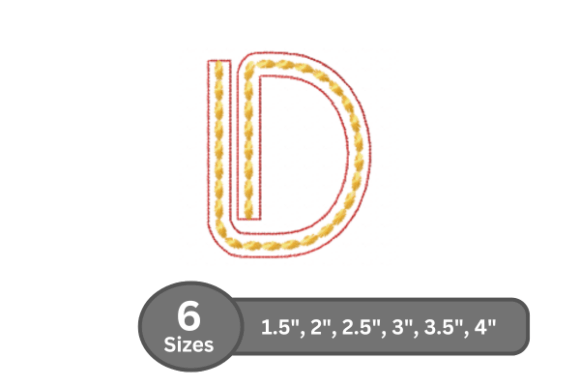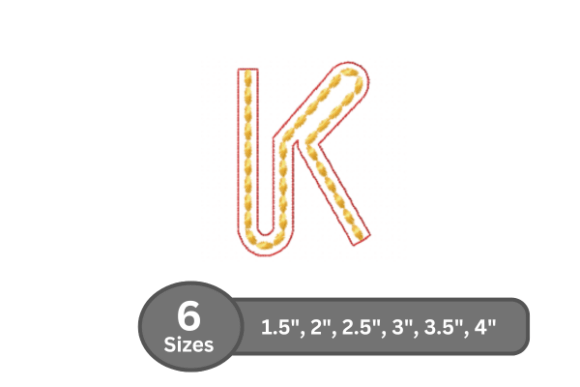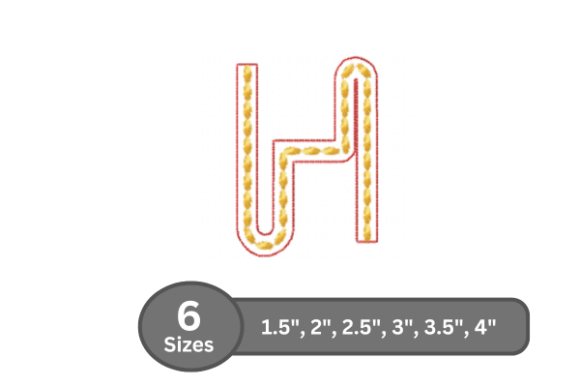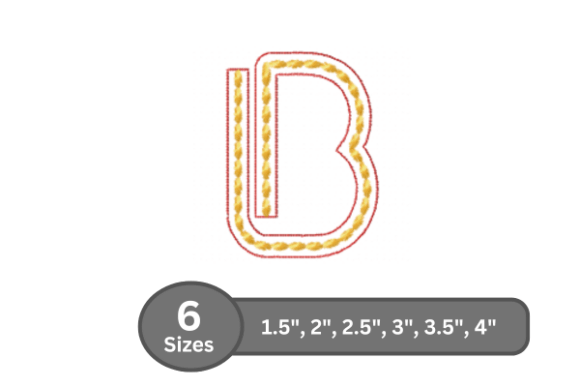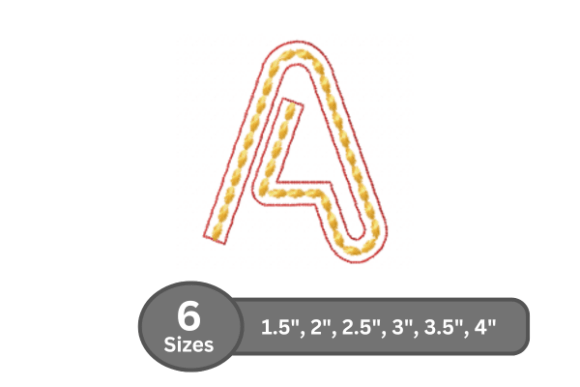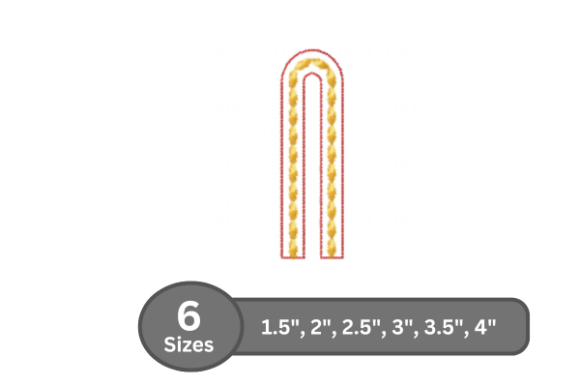
Rope Twist Alphabet - I
First Impression: Rustic Charm Meets Clean Craftsmanship
As an embroidery designer who’s stitched over 300 craft fair booths—from snowy Vermont markets to sun-drenched California pop-ups—I unzipped Rope Twist Alphabet - I expecting something tactile, grounded, and quietly confident. And it delivers. This isn’t a fussy script or a sterile sans-serif—it’s a fill-stitch monogram with gentle rope-like contours, subtle weight variation, and organic flow. It reads as rustic-modern: warm enough for farmhouse aprons and tea towels, structured enough for boutique tote bags and embroidered patches. Customers don’t just see letters—they see handmade intention.
Where It Shines on Craft Fair Products
Rope Twist Alphabet - I thrives where texture meets personality. On a heavyweight canvas tote bag? Instant visual anchor—especially when centered above a small embroidered herb sprig or market logo. On a linen apron? It grounds the design without competing with pockets or straps. For tea towel embroidery, its generous curves hold up beautifully against terry loops and fabric texture—no lost detail, no jagged edges. Even on curved surfaces like caps, the smooth digitization helps maintain legibility (though test stitching is non-negotiable—more on that below).
It also works smartly at scale. At 2.5 inches tall, Rope Twist Alphabet - I reads clearly on a 4”x4” hoop—ideal for pillow covers, fabric pouches, and small-market-bag tags. At 4.5 inches, it becomes a statement on a market bag or booth banner. Unlike delicate fonts, this one doesn’t vanish in booth lighting or get drowned out by surrounding product clutter. That’s critical when your display has ten other makers within arm’s reach.
What Makes It Sell—Beyond Aesthetics
- Instant recognition: No decoding needed. Customers glance and *get* it—monogram, personalization, handmade care—all in one glance.
- Etsy-ready clarity: Photographs cleanly against light and dark fabric. Its consistent stitch density renders well in natural-light mockups and printable mockup templates—no fuzzy edges or thread bleed in thumbnails.
- Batch-friendly rhythm: As a single-letter machine embroidery design, it’s highly repeatable. Whether you’re embroidering “A” for Ashley’s apron or “M” for Maya’s pouch, the rhythm of spacing, tension, and fill remains predictable—cutting down on re-hooping and thread breaks.
- Brand-flexible: Works equally well for a minimalist botanical shop (“E” for Earth & Ember) or a playful kids’ line (“L” for Little Sprout). It doesn’t lock you into one vibe—it supports yours.
Careful-Use Notes Every Maker Should Know
Even well-digitized embroidery files demand respect for material reality. Here’s what Rope Twist Alphabet - I asks of you:
- Avoid tiny sizes: Below 1.75”, the rope twist detail begins to compress—stitch density increases, risking puckering on lightweight cotton or dense coverage on dark fabric. Stick to ≥2” for reliable clarity.
- Stabilizer is non-optional: This is a fill-stitch font—not outline or satin. Use medium-weight cutaway or tear-away stabilizer, especially on textured towels or thick canvas. Skip it, and you’ll lose definition and smoothness.
- Thread contrast matters more than you think: On charcoal linen or navy denim, a cream or oat thread lifts the rope texture beautifully. On ivory toweling? Go deep—charcoal or espresso thread adds dimension. Always test thread colors on scrap fabric under booth lighting.
- Curved surfaces need prep: Caps and curved pouches require basting + adhesive stabilizer. The rope contour can stretch or distort if the fabric shifts mid-stitch. Hoop tightly—and don’t skip the test run.
Real Designer Workflow Tips Before Booth Day
- Test on your exact fabric: Not “similar” fabric—your actual tea towel, your exact cap twill, your pouch linen blend. Stitch density behaves differently across fiber content and weave.
- Check spacing in context: If pairing Rope Twist Alphabet - I with a secondary motif (e.g., a tiny bee or olive branch), stitch both together—even as a digital embroidery file preview—to confirm balance and breathing room.
- Confirm hoop size compatibility: Does your machine’s most-used hoop (e.g., 4”x4” or 5”x7”) comfortably fit the largest version you plan to offer? Don’t assume—measure the design boundaries in your software.
- Create one real mockup—not digital: Embroider it, press it, hang it on your booth display rack. See how light hits the rope twist in morning vs. afternoon sun. That’s your truth test.
- Verify commercial licensing: Since this is a digital embroidery file intended for finished product resale, confirm the license permits commercial embroidery use. Your Etsy seller account, small shop product line, or wholesale agreement depends on it.
Why Rope Twist Alphabet - I Strengthens Your Entire Booth
This isn’t just another monogram—it’s a quiet confidence-builder for your handmade product line. When customers see Rope Twist Alphabet - I on a well-stitched tote bag or a crisp linen pillow cover, they register craftsmanship, consistency, and attention to detail. It elevates perceived value without shouting. It supports brand storytelling—whether your shop leans earthy, elevated, or warmly nostalgic. And because it performs reliably across categories (apron embroidery, tea towel embroidery, embroidered patch applications), it reduces your design fatigue and speeds up production cycles.
In short: Rope Twist Alphabet - I is booth-smart, Etsy-ready, and customer-tested—not in data, but in the dozens of “Oh—I *need* that in my initial” moments I’ve watched unfold at craft fairs year after year. It’s the kind of embroidery file that doesn’t just sit in your design assets folder—it moves product, builds repeat buyers, and quietly tells people you know what handmade quality actually looks and feels like.